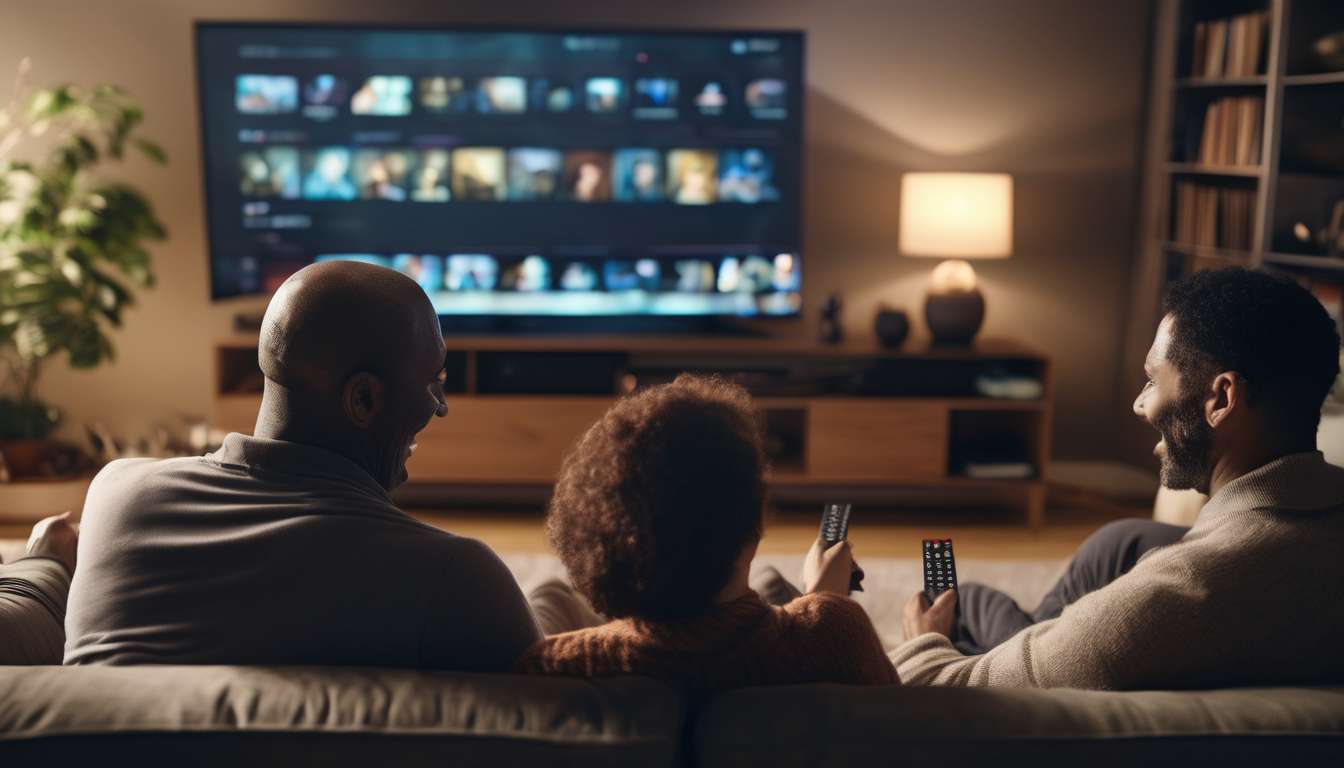
Lying on the couch after a long day, we fumble for the remote and realize the movie’s captions are tiny, the audio mixer is buried in menus, and the interface won’t remember our preferred playback speed.
That small frustration is more than a nuisance; it’s a reminder that adult movies, like all media, often overlook accessibility needs.
We recount evenings when family members with hearing loss or mobility limits wanted to share a moment but were shut out by clumsy design, or when adjustable audio and clear navigation would have turned awkward pauses into seamless connections.
These experiences prompted us to look deeper: how can modest updates transform the user experience?
- Larger captions
- Customizable audio tracks
- Tactile-friendly controls
- Simplified account settings
This article explores recent accessibility improvements in adult entertainment platforms, showing how thoughtful changes not only broaden inclusivity but also enhance enjoyment, dignity, and ease for a wider audience.
Caption Size Options
Adjustable caption size options
We’ve added adjustable caption size options so viewers can choose text that’s comfortable and readable on any screen.
Available scaling choices
- Small
- Medium
- Large
- Custom
Cross-device legibility
We tested sizes across phones, tablets, and desktops to ensure legibility without obscuring visuals.
Accessibility best practices
We aligned font, contrast, and spacing choices with best practices so captions support comprehension for diverse viewers.
Saved preferences
We made it easy to save preferences to profiles, so community members won’t need to reset options each time.
Coexistence with other features
We ensured these settings coexist smoothly with other player features, including volume and playback controls, without interference.
Commitment to improvement
We’re committed to iterative improvement based on feedback and will keep refining caption options to better meet the needs of people who rely on them, helping everyone feel included and respected when they watch.
Enhanced Audio Controls
We’re rolling out refined audio controls so viewers can quickly balance dialogue, background sound, and narration for a clearer, more comfortable listening experience.
Simple sliders and presets let everyone—whether they’re hard of hearing or in a noisy room—tune audio without hunting through menus.
Controls are integrated with other accessibility features, sitting alongside captions so the interface feels cohesive and welcoming.
Included audio features:
- Spoken-word boost
- Ambient reduction
- Narration-level setting
Features can be used independently or together and have been tested with diverse users to ensure they’re intuitive.
Ongoing refinement based on community input — accessibility isn’t a checkbox; it’s how we make content feel inclusive.
Our goal: when you arrive, you quickly find audio controls that match your needs so you can relax, focus on the content, and know the platform was designed with you in mind.
Keyboard Navigation
We make keyboard navigation fast and predictable so viewers can browse, play, and control everything without reaching for a mouse.
We design clear tab order, visible focus outlines, and consistent shortcuts so everyone feels included and confident using the site.
Our approach ties directly into accessibility goals:
- Keyboard users can open menus.
- Users can skip to captions.
- Users can toggle audio controls without hunting for tiny buttons.
We test with real users who rely on keys, adjusting focus traps and ensuring modal dialogs return focus correctly.
We keep shortcut keys intuitive and documented.
- Provide alternative key sequences for conflicting system shortcuts.
- Document shortcuts in an accessible help panel.
We ensure interactive controls respond instantly and announce status changes:
- Captions toggle and audio controls respond immediately to key events.
- Important status changes are announced to screen readers via ARIA live regions.
By prioritizing predictable behavior, short key paths, and robust ARIA labeling, we create an environment where each viewer belongs and can enjoy content smoothly — no mouse required, no confusion, just reliable, respectful navigation.
Voice Command Support
Overview of voice command support
We’re adding reliable voice command support so viewers can search, play, and control playback hands-free. This makes the site more accessible and lets people interact without a mouse or keyboard.
Speed, consistency, and user confidence
We’ve built voice features that respond quickly and consistently. Users receive clear on-screen prompts and confirmations so they know when commands were recognized.
Core voice command capabilities
- Users can say simple phrases to:
- search for titles,
- play or pause content,
- jump to specific scenes,
- toggle captions,
- adjust audio controls.
Privacy and performance
- Privacy-first processing and low-latency responses are priorities.
- On-screen confirmations provide transparency about what the system heard and did.
Language, localization, and robustness
- Commands support natural language variations and localized options so community members who speak differently feel included.
- We’ve tested common edge cases to reduce frustration, including:
- background noise,
- short utterances,
- multilingual input.
User controls and education
- We’ll provide a brief voice command tutorial to help users get started.
- We’ll include an easy way to disable voice control for those who prefer not to use it.
Goal
By combining accuracy, transparency, and practical controls (captions, audio controls, clear prompts), we’re making media access more inclusive and empowering for everyone who visits our platform.
Contrast and Color Modes
We’ll add high-contrast and customizable color modes so users can tailor visuals for readability and comfort.
We’ll offer preset themes and a simple theme editor so everyone can pick contrasts that reduce eye strain and improve content clarity.
By doing this together, we create a space where people feel seen and accommodated.
We’ll ensure color choices work with on-screen captions, keeping text legible against backgrounds and maintaining consistent focus areas.
Our palette options will consider color-blind friendly combinations and sufficient contrast ratios, so captions remain readable without forcing users to strain.
We’ll provide an easy toggle to switch modes and remember preferences across devices.
We’ll also sync visual settings with accessibility features like audio controls, so users who prefer softer visuals can pair them with adjusted volume or narration levels for a comfortable, cohesive experience.
By centering inclusive design, we’ll make the platform welcoming and dependable, encouraging users to engage confidently with content that respects their needs.
Simplified Playback Controls
Playback controls will be streamlined for minimal taps or gestures.
- We’ll provide play, pause, skip, and speed-adjust actions with simple, discoverable gestures and buttons.
- Controls will be reachable with a single tap or a brief gesture where appropriate.
A compact, predictable control bar will be designed to behave consistently across devices.
- The control bar will use the same layout and placement on mobile, tablet, and desktop so users learn one pattern.
- Predictability builds confidence and reduces search time for controls.
Controls will be large and easy to tap, with optional gesture shortcuts.
- Touch targets will meet or exceed recommended minimum sizes.
- Gesture shortcuts (e.g., swipe to seek) will be optional and documented so users can choose what works for them.
Accessibility features will be integrated into the core layout.
- Clear labels for caption toggles and controls so screen readers announce meaningful names.
- Accessible audio controls, including volume and balance sliders, with keyboard and screen-reader support.
- A single, configurable button to rewind or advance by set intervals (e.g., 10s, 30s).
Keyboard and focus support will be explicit and usable.
- Visible focus outlines and a logical tab order for all interactive elements.
- All controls operable via keyboard (Enter/Space for activate, arrow keys for sliders/seek where appropriate).
Touch and pointer ergonomics will be respected.
- Sizable touch targets and spacing to avoid accidental taps.
- Pointer hover states and touch-friendly hit areas that map to visual affordances.
Error feedback will be plain, actionable, and respectful.
- Clear messages that explain what went wrong and how to recover (e.g., “Network error — tap to retry”).
- Avoid technical jargon; keep recovery actions one-tap where possible.
Consistency and customization will reduce cognitive load and foster inclusion.
- Defaults will work well for most users, while settings allow personalization (control layout, skip intervals, gesture enable/disable, playback-speed presets).
- Maintaining consistent behavior across contexts helps users build reliable mental models.
Primary goal: make playback effortless and inclusive for everyone.
- Deliver controls that respect diverse needs so all users can enjoy content together with minimal friction.
Personalized Accessibility Profiles
We will let users create personalized accessibility profiles that save their preferred controls, captions, audio, and gesture settings for instant use across devices.
Profiles will be easy to set up, name, and switch so everyone can feel seen and supported.
By storing accessibility choices in a secure account, we ensure consistency whether someone’s watching on a phone, tablet, or desktop.
We will provide quick toggles and precise controls:
- Quick toggles for captions
- Precise audio controls, including preferred volume leveling
- Options for control layouts to match motor preferences
Profiles will remember display and playback preferences:
- Font size
- Contrast preferences
- Caption cadence choices
- Preferred volume leveling
We will support shared and private profiles:
- Shared profiles for partners or groups who want the same experience
- Private profiles for individual needs
Onboarding will invite users to create a profile and explain benefits clearly:
- Offer an easy setup flow that encourages profile creation
- Provide sample previews so users can see changes immediately
- Make switching profiles immediate and intuitive
Our goal is to build a welcoming environment where everyone can access content comfortably, efficiently, and with dignity.
Closed Caption Styling
We’ll let viewers fully customize closed caption styling—font, size, color, background, and positioning—so text is readable and unobtrusive across devices.
We know accessibility isn’t one-size-fits-all, so we give tools that let people tune captions to their comfort and identity.
We provide preset themes and granular controls, and we let users save preferred looks to personalized profiles so every session feels familiar.
We test contrast, line length, and spacing to reduce eye strain.
We make sure captions never obscure interactive elements or conflict with on-screen prompts.
Controls are integrated with audio controls so users can balance sound and text without hunting through menus.
We include options for:
- Speaker labels
- Emphasis styling
- Live transcript syncing for synchronous viewing
We will collect feedback and iterate with community input, ensuring captions reflect diverse needs.
By centering usability and belonging, our caption styling supports clearer communication, dignity, and consistent enjoyment across platforms.
Will these accessibility updates affect my subscription price or require an additional fee?
We’re not increasing subscription prices or adding fees.
We will not charge extra for accessibility features; we are absorbing the implementation costs to make content usable for everyone.
If anything changes in the future, we will notify our community well in advance and provide clear options.
Our commitment: we want everyone to feel welcome and included, and we will ensure accessibility does not create barriers to joining us.
How is user privacy handled when enabling voice commands or personalized accessibility profiles?
We care about privacy when users enable voice commands or personalized profiles.
We store only what’s needed, anonymize data, and encrypt it in transit and at rest.
We won’t sell personal info or share it without consent.
We’ll give clear controls to view, edit, or delete settings.
We’ll explain data retention periods and let users opt out or use on-device processing where available to minimize exposure.
Are these accessibility features available across all platforms (web, iOS, Android, smart TVs, and streaming devices)?
Platform support varies; not every feature is on every device yet.
Core accessibility tools are available on:
- Web
- iOS
- Android
Compatibility is expanding to:
- Smart TVs
- Streaming boxes
We’ll keep you updated as we add full parity.
Tell us which platforms matter most so we can prioritize and make sure everyone feels included.
Conclusion
You’ll notice these accessibility updates make adult movies easier and more enjoyable to use.
With adjustable caption sizes, enhanced audio controls, keyboard navigation, and voice commands, you’ll find content that fits your needs quickly.
Contrast and color modes plus simplified playback controls reduce strain and frustration.
Closed caption styling and personalized accessibility profiles let you tailor settings once and enjoy them everywhere.
Overall, these changes give you a smoother, more comfortable viewing experience.